

Databases & Tools
Researches
-
 The research papers of NIES staff that have been presented at conferences are listed in the database, and can be found by searching for Author, Title, Bulletin or Journal.
-
Introduction of the NIES Researchers.
-
-
Global Environment
-
The Global Environmental Database serves as a fundamental database of the Center for Global Environmental Research at NIES. The GED disseminates research data and results related to global environmental problems with an emphasis on global warming and climate change. Near real-time monitoring data of greenhouse-gases and online analysis tools (e.g. CGER METEX: trajectory calculation) are also available.
Climate Change
-
National GHGs Inventory Report of JAPAN (NIR), Greenhouse Gas Inventories submitted to UNFCCC by Government of Japan. These data are based on the greenhouse gas inventory submitted from Japanese Government to the United Nations Framework Convention on Climate Change.
-
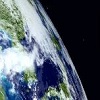 We provide an overview of the current regional patterns of carbon balance by terrestrial ecosystems as map image data. The data are obtained by integrating ground-based and satellite observation data with model simulation, and can be downloaded from this web site.
-
 This web site provides processed products of GOSAT observation data.
-
 A database collecting a number of greenhouse gas emissions scenarios.
-
 This dataset indicates global distributions of man-made CO2 emissions due to fossil fuel combustion at 1x1km spatial resolution.
Stratospheric Ozone
-
Providing information on ultraviolet radiation, including UV index, for 14 sites in Japan on hourly basis. A website for cellular phone is also available.
-
Forecast of the position, shape, and size of the polar air-mass in the stratosphere. It is displayed in terms of potential vorticity maps calculated by CGER, using the National Center for Environmental Prediction (NCEP) weather forecast data.
-
 UV radiation contains erythemally-weighted UV, as well as UV that synthesizes vitamin D3. Here the time to reach the MED and that needed to produce 10 μg of vitamin D for various sites across the Japanese Archipelago, is shown which will enable people to effectively manage their UV exposure and consider the risks and benefits of UV radiation.
Hydrology / Water Resources
-
The global water resources model H08 is a distributed hydrological model designed for global application. The model enables us to simulate not only natural terrestrial hydrological cycle but also major human activities at high spatial and temporal resolutions. Source code, manuals, and meteorological input data of H08 are available.
Health / Chemical Substance
-
KATE (KAshinhou(*) Tool for Ecotoxicity) is an ecotoxicity prediction system that consists of quantitative structure-activity relationship (QSAR) models. KATE is being developed with the aim of predicting acute and chronic toxicity to fish, daphnia, and algae. (*)Chemical Substance Control Law in Japanese
-
Environmental Certified Reference Materials (CRMs) are utilized to evaluate new analytical methods and to control the accuracy of pretreatment and instrumental analyses.
-
The impact of chemicals on the ecosystem has been measured in ecotoxicity studies using typical aquatic species of the three trophic levels, i.e., algae (phytoplankton), daphnia, and fish (e. g. medaka fish). A-TERAM aims to more accurately evaluate the effects on the ecosystem by incorporating ecological factors such as the life history of these species and the ecological interactions between species into the model.
-
The environmental quality standards (EQSs) are established and revised by the Ministry of the Environment, Japan. This website compiles references regarding the establishment and revision of EQSs and related items.
Atomospheric Environment
-
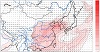 This page displays distributions of Asian dust, anthropogenic aerosols, and tracers (chemical components) forecasted by Chemical weather FORecasting System (CFORS).
Water / Soil Environment
-
This database provides water quality and aquatic organism data of Lake Kasumigaura, which has been monitored for more than 40 years since the establishment of NIES.
Biology / Ecosystem
-
This is a searchable database that contains information on the main invasive alien species in Japan.
-
It is possible to refer to the list of strains preserved in the microbial culture collection at NIES, which includes the essential information of the culture strains, references, and image data. Additional information, such as how to order, deposit, handle, and cultivate strains is also available.
-
An ecological observation database managed by JaLTER in order to facilitate long-term ecological researches. Observation datasets in the database, provided by JaLTER sites, are available for non-commercial use.
-
-
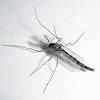 The database search system provides DNA barcoding information on chironomid specimens, including DNA barcodes, taxonomy, and collection sites.
-
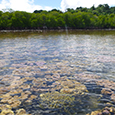 A website that provides information on tropical coastal ecosystems, such as world maps and lists of mangrove species.
-
 BioWM contains mapping systems for GBIF occurrence data (specimen and observation records) and research data provided by NIES.
-
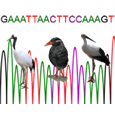 NIES provides draft whole genome sequences of mainly endangered species in FASTA format, as research outcomes from the Project for the Promotion of Environmental Genomics Studies.
-
This database archives underwater videos filmed in Lake Biwa using carp-mounted video-loggers. The videos provide valuable information about the nature of fishes and other organisms inhabiting the lake.
-
Research summary and outcomes of Environment Research and Technology Development Fund (S-15) "Predicting and Assessing Natural Capital and Ecosystem Services through an Integrated Social-Ecological Systems Approach", such as the database search system, Web GIS, and policy briefs are available.
Waste / Recycle
-
Database related to the SDG Indicator 11.6.1 on municipal solid waste management in developing countries of the Asia-Pacific region.
-
The Lifespan database for Vehicles, Equipment and Structures (LiVES) is a database based on lifespan and usage data for commodities, containing information collated from a variety of sources, such as national statistical surveys; research papers; and reports by industrial bodies.
Environment and Society
-
 Scope of the database covers 28 countries, regions, and international organizations listed and 1,848 types of indicators.
-
Database compiling embodied environmental burden intensities for approximately 400 sectors of economic activity in 1990 and 1995.
-
 This database provides the carbon footprints by the average citizen of 52 major Japanese cities; 65 decarbonized lifestyle options related to mobility, housing, food, leisure, and consumer goods; and city-wise greenhouse gas reduction potentials.