
Faclities
Layout of NIES
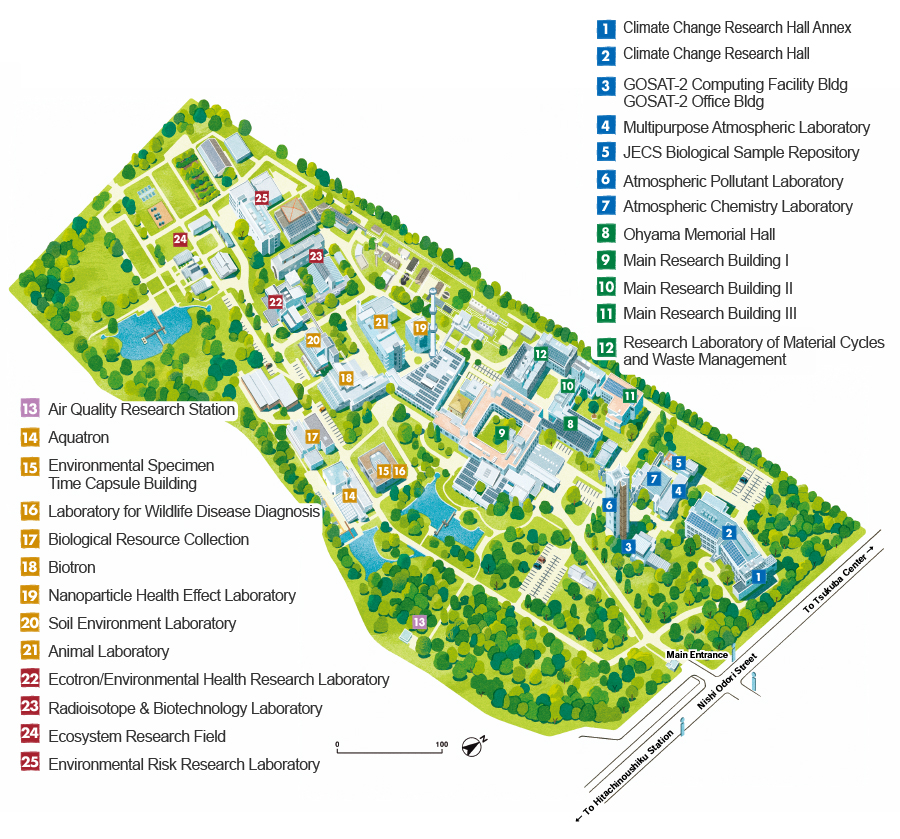
Main Research Building I
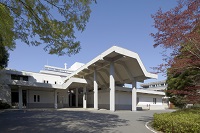
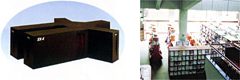
Library/Supercomputer
This building houses analytical instrumentation and support facilities such as clean rooms. The instruments permit accurate, highly sensitive and selective detection of harmful substances in environmental samples. Stable isotope analysis facilitates research on global warming and the origins of pollutants. Among this building's instruments, listed below, are some that are used for research and development of new analytical methods.
Table of Analytical Instrumentation in Main Research Building I
| Standard Instruments (Free Access to Institute Researchers) |
Special Instruments (Restricted Access) |
|---|---|
| Gas Chromatograph/Mass Spectrometer Gas Chromatograph with Atomic Emission Detector Scanning Electron Microscope Transmission Electron Microscope Ultraviolet-Visible Microscope Spectrophotometer Inductively Coupled Plasma Emission Spectrometer Atomic Absorption Spectrometer X-ray Fluorescence Spectrometer X-ray Photoelectron Spectrometer Stable Isotope Mass Spectrometer (for gas samples) Fourier Transform Infrared Spectrometer Nuclear Magnetic Resonance Spectrometer Flow Cytometer High-Speed Amino Acid Analyzer |
Gas Chromatograph/Mass Spectrometer High-Performance Liquid Chromatograph/Mass Spectrometer Inductively Coupled Plasma Mass Spectrometer Secondary Ion Mass Spectrometer High-Resolution Mass Spectrometer High-Precision Stable Isotope Mass Spectrometer (for gas samples) Thermal (Surface) Ionization Mass Spectrometer (for stable isotopes) Atmospheric Pressure Ionization Mass Spectrometer Laser Raman Spectrometer X-ray Diffractometer |
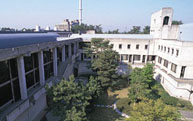
Main Research Building II
1) Evaluation Laboratory of Man-Environmental Systems (ELMES) and Systems Analysis and Planning in Intelligent Environmental Information Systems (SAPIENS)
ELMES includes a medium-sized conference room that serves as a group laboratory, a multi-group laboratory for gaming simulations, and minicomputer control devices for experiments, all to facilitate the experimental evaluation of human attitudes toward the environment, the environmental planning process and the effect of environmental information on these. SAPIENS is comprised of an environmental database, an image processing and display system and a minicomputer for presenting environmental information in ELMES. SAPIENS is also used to develop and study local environmental information systems.
2) Preservation Laboratory
This facility includes -20C, 4C and 25C temperature-controlled rooms, a room for -100C and -80C freezers and a room for archives. Environmental specimens are stored here for long periods. Research on specimen preservation is also conducted.
Main Research Building III
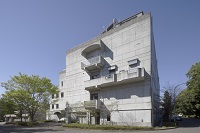
1) Fourier-Transform Mass Spectrometer (FT-MS)
FT-MS has very high mass resolution, more than 106 at m/z = 131, with a superconducting magnet rated at 3 Tesla. Cluster ions with high mass numbers, isotopes/isobars, and reactions of radicals and ions can be measured with very high mass resolution.
2) Tandem Mass Spectrometer (Tandem-MS)
Two double-focus type mass spectrometers, each with a resolution of 6.5 L 104, are connected serially (in tandem). The ions selected by the first mass spectrometer are modified by electron impacts and other reactions in the interface area and the resulting ions are analyzed by the second mass spectrometer. The chemical structures of complex molecules can be analyzed with this technique.
3) Accelerator Mass Spectrometer (AMS)
An electrostatic tandem accelerator of 5 million V (max.) terminal voltage is interfaced with two ion sources and an analytical mass spectrometer system. Isobaric atomic ions can be distinguished by the electric charges of their nuclei. The AMS is a very sensitive and selective method for atomic ion detection and it is used for measurements of long-lived radioisotopes such as 14C and 36Cl. These radioisotopes are used as tracers and time-markers (dating agents) in environmental research.
4) Hazardous Chemicals Area
Highly toxic substances, such as dioxins (chlorinated dibenzodioxins), polychlorinated biphenyls (PCBs) and polychlorinated dibenzofurans, are used in this area. The air pressure inside the area is maintained below atmospheric pressure, which prevents toxic fumes from leaking out. Exhaust air is treated by high-performance filters (HEPA) and charcoal filters; discharge water is also treated with a charcoal filter system. These filters and other wastes are destroyed by appropriate incineration facilities installed within the area. The Hazardous Chemicals Area contains a gas chromatograph/mass spectrometer (GC/MS) and a microcosm, as well as facilities for microorganism-related research, animal exposure experiments and measurements of the physical and chemical properties of substances.
5) Data Handling Facility for the Improved Limb Atmospheric
Spectrometer (ILAS) and the Retroreflector in Space (RIS) ILAS and RIS are satellite-borne sensors for measuring atmospheric constituents, such as ozone, and were developed by the Environment Agency of Japan as components of the Advanced Earth Observing Satellite (ADEOS), named Midori after launching. In August 1996, ADEOS was launched by an H-II rocket from the Tanegashima Space Center of Japan. Data obtained by ILAS/RIS are processed, archived and distributed by NIES. The data handling facility includes a parallel processing computer system, a highspeed network system and software, optimized for processing the data from these satellite sensors.
6) Millimeter-wave Spectrometer System for Observation of Atmospheric Ozone
The millimeter-wave spectrometer is widely and extensively used in astronomical measurements of gaseous molecules in space. Ozone molecules in the stratosphere and mesosphere radiate millimeter-range radio waves. The spectrometer system was completed in October 1995, and since then has continuously monitored the vertical distribution of ozone (35~75 km altitude), except on rainy or heavily overcast days.
7) Eco-Office
This is an office area for evaluating energy-saving/solar-energyutilizing equipment such as wall insulation, solar cells and a solar hot water supply system. Several types of solar cells, such as singlecrystal, multi-crystal and amorphous types, are being compared under identical conditions. The hot water generated is used as the source for a heat-pump type air conditioner as well as for hot water faucets.
8) Reception and Processing Facility for NOAA Satellite Data
The Advanced Very High Resolution Radiometer (AVHRR) orbits the earth on a National Oceanic and Atmospheric Administration (NOAA, USA) satellite. This instrument monitors 5 electromagnetic radiation wavelength bands from the visible to the infrared region with high temporal resolution and a relatively medium spatial resolution (ca. 1 x 1 km). The NIES AVHRR facilities consist of 2 receiving stations -- one at NIES, Tsukuba, and the other on the island of Kuroshima, Okinawa -- and a data processing center at NIES.
9) Information Processing Center for GRID-Tsukuba
GRID-Tsukuba is a part of the Center for Global Environmental Research (CGER). The GRID information processing system was introduced at NIES in 1994. This system, which consists of a remote-sensing image processing system and a geographic information system, is operated by NIES researchers to process GRID data and to produce original data sets. The work stations of this system are connected to a supercomputer, super-minicomputer and personal computers through a LAN. Several software packages, including ERDAS/IMAGINE, ARC/INFO and GRASS, are installed on these workstations. Image processing is done with IDRISI on an IBM/PC.
Atmospheric Chemistry Laboratory
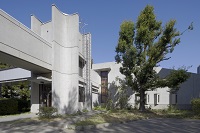
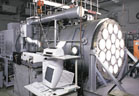
This is a 6-m3 stainless steel chamber that permits studies of atmospheric photochemistry at pressures as low as 10-7 Torr. This facility is essential to our research on the photochemistry of urban smog, stratospheric ozone depletion, and other important atmospheric phenomena.
Multipurpose Atmospheric Laboratory
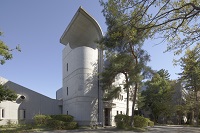
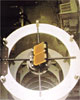
The aero-free-space laboratory serves as the site for instrument calibration for both laboratory and field experiments. It is also available for atmospheric research that cannot be done in any of the other atmospheric research facilities.
The ozone laser radar is equipped with 3 lasers of different wavelengths and 56- and 200-cm caliber telescopes. Accurate ozone profiles up to an altitude of 45 km are being measured with this instrument.
Radioisotope & Biotechnology Laboratory
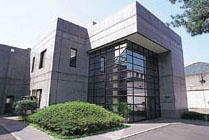
The Environmental Biotechnology Laboratory is used to develop applications of recombinant-DNA technology for environmental protection and to study the fate and effects of recombinant organisms in ecosystems. This laboratory was completed in FY 1993. The specialized instruments of the laboratory, including a peptide sequencer and a DNA sequencer, are actively used.
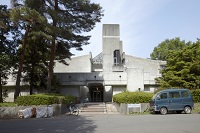
In this laboratory, radioisotopes are used to facilitate studies of the transport, accumulation, chemical conversion and toxicity of environmental pollutants in plants, animals, soil, water and the atmosphere. The use of 36 b and g emitting isotopes is permitted, but the use of a emitters is forbidden.
Aquatron
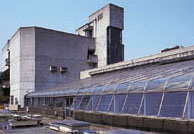
The facilities of this unit facilitate study of groundwater transport and coastal water quality. A large ocean microcosm is uniquely equipped to permit culture of marine algae and studies of CO2 dynamics and elemental cycles.
Animal Laboratory
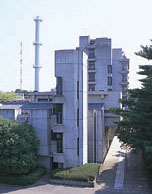
The animal laboratory has two facilities, in which environmental conditions are controlled. Facility I breeds conventional and specific pathogen-free laboratory animals and has complex gas exposure chambers. Facility II also has a conventional laboratoryanimal breeding unit and is useful for studies of the effects of heavy metals and residual chemical exposure. The Nuclear Magnetic Resonance Imager (NMRI) for living organisms images living bodies and active metabolic functions of humans and animals.
Soil Environment Laboratory
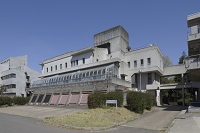
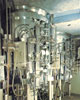
This is the soil laboratory, which contains large lysimeters, special growth chambers for studies of pesticide and heavy-metal effects, and soil-temperature-controlled chambers. Growth effects of pollutants and reclamation of contaminated soil are also studied.
Biotron
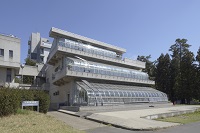
The botanical laboratory complex consists of two major facilities to evaluate the effects of various detailed environmental scenarios on plants and soils. Both facilities include experimental chambers in which light, temperature and humidity can be precisely controlled. Facility I also facilitates exposure of the experimental plants and soils to pollutant gases under these controlled conditions. Facility II has 2 simulators that permit the creation of microenvironments stratified from the soil up through the overlying atmosphere.
Ecotron/Environmental Health Research Laboratory
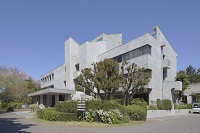
This laboratory includes a variety of facilities to evaluate pollution effects on community health. The Noise Effects Laboratory has one anechoic room and three sound-proof rooms for testing the psycho-physiological effects of noise on health. The Community Health Laboratory provides facilities for epidemiological studies on humans and experimental studies on animals to evaluate the effects of environmental pollutants.
Experimental Farm
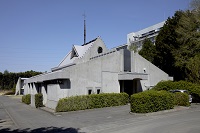
The institute's experimental farm is 4 km west of the main grounds. The farm's facilities include a cultivated field, an experimental field, lysimeters, a greenhouse, a tool storage shed, an observation tower, a remnant natural forest and offices. This farm serves to test results obtained in the indoor controlled-environment biological laboratories of the Institute; to evaluate the environmental maintenance functions of plant and soil ecosystems; and to supply plant material, particularly for use in bioassays and bioremediation, to researchers at the Institute.
Climate Change Research Hall
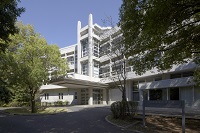
Climate change, caused by increasing atmospheric greenhouse gas concentrations, is the most important global environmental issue facing humanity today. Countermeasures must be based on sound scientific assessments. The following major research programs are conducted in this new facility:
(1) development and application of the climate change models based on various socio-economic and emissions scenarios,
(2) monitoring of atmospheric constituents to evaluate the ocean and terrestrial carbon sinks, and (3) assessment of forest sinks by remote sensing, forest models and statistical data. In addition, the facility includes equipment to evaluate low emissions vehicles.
Research Laboratory of Material Cycles and Waste Management
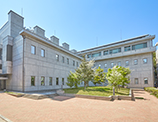
In April 2001 NIES established the Research Center for Material Cycles and Waste Management, as an expansion of the Waste Research Division that had been created in January in connection with national government’s administrative reforms. Construction of the Waste and Recycling Research Building was begun as part of this expansion. The new building supports research on resource circulation and waste management, resource recovery and recycling, and technologies for environmental risk reduction and restoration after pollution, as well as testing, evaluation and monitoring.
Microbical Culture Collection
This facility collects, characterizes, cultures and distributes strains of microorganisms. Many of the strains in the collection are important for the study of red tides and other phytoplankton blooms (including toxic algae), bioremediation, pollution bioassays and carbon cycling.
Biological Resource Collection
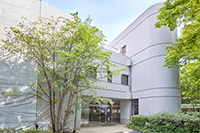
In order to enhance research relating to microbes that are important for environmental studies such as hazardous substance decomposing microbes, and to preserve experimental materials for conservation studies, a new building is being constructed as an annex of the Microbial Culture Collection Building at NIES. The new facilities consist of rooms for cryopreservation, identification and classification, evaluation of functions, genetic analysis, and databases of environmental microbes.
Environmental Risk Research Laboratory
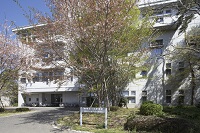
The Environmental Risk Research Laboratory is the core research facility of Research Center for Environmental Risk. In the Laboratory extensive research activities on ecological effects, human health effects and environmental exposure, as well as collection, analysis and dissemination of related information, are being conducted. The building is equipped with several special facilities including fresh water and marine water exposure systems for ecotoxicological research, breeding room for laboratory animals, and instruments including a liquid chromatograph -tandem mass spectrometry (LC/MS/MS) for the qualitative and quantitative analysis of environmental chemicals and a confocal laser scanning microscopy for cell biology.