
Center for Climate Change Adaptation
Director
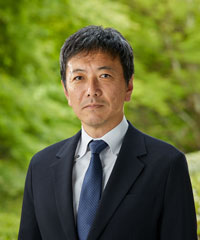
Director of Center for Climate Change Adaptation
HIJIOKA Yasuaki
Greetings
The Center for Climate Change Adaptation (CCCA) was established on December 1, 2018, coinciding with the enforcement of the Climate Change Adaptation Act. In 2026, we marked our eighth anniversary.
The Climate Change Adaptation Act was launched with four primary pillars: comprehensive promotion of adaptation, development of information infrastructure, strengthening of regional adaptation, and international expansion of adaptation efforts. In recent years, the risk of heatstroke associated with global warming has increased, with over 1,500 heatstroke-related deaths recorded in Japan in some years, indicating the serious impact of this issue. Consequently, the Act was amended in April 2024 to incorporate strengthened countermeasures against heatstroke.
Under this legislation, the National Institute for Environmental Studies (NIES) is formally mandated to perform key roles, including: "the collection, analysis, organization, and provision of information on climate change impacts and climate change adaptation"; "providing technical advice and other technical support to prefectures and municipalities regarding the formulation or promotion of local climate change adaptation plans"; and "offering technical advice and other technical assistance to Local Climate Change Adaptation Centers (LCCAC)." As the core entity for these efforts, CCCA comprehensively promotes technical assistance and research for national and subnational governments, businesses, and individuals, through close coordination with relevant administrative agencies within the national government’s promotion council.
Under our 6th Mid-to-Long Term Plan, the Climate Change Adaptation Promotion Office takes a central role, collaborating with our four specialized laboratories. Together, we provide technical assistance and expert lecturers, enhance the Climate Change Adaptation Information Platform (A-PLAT), and organize workshops and training sessions for local governments, LCCAC, and businesses.
Regarding our scientific research, we operate through three core pillars: the Climate Change Impact Monitoring Section, which detects past and current impacts and elucidates their mechanisms; the Climate Change Impact Assessment Section, which refines assessment methodologies across multiple sectors and spatial scales; and the Climate Change Adaptation Strategy Section, which provides scientific support for adaptation strategies tailored to social changes and regional characteristics. These sections lead our Strategic Research Program, joint research with LCCAC, and the development of intellectual research infrastructure. The Asia-Pacific Climate Change Adaptation Laboratory builds partnerships with regional organizations to expand and operate the Asia-Pacific Climate Change Adaptation Information Platform (AP-PLAT).
Adapting to climate change means preparing for an uncertain future, and its implementation in society is no easy task. However, driven by our mission to realize a sustainable future that overcomes climate risks, we remain steadfast in our commitment to exploring the path of adaptation with unwavering passion and dedication.