
NIES's Site Layout 2
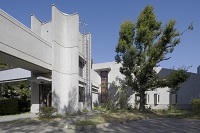
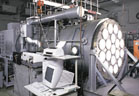
This is a 6-m3 stainless steel chamber that permits studies of atmospheric photochemistry at pressures as low as 10-7 Torr. This facility is essential to our research on the photochemistry of urban smog, stratospheric ozone depletion, and other important atmospheric phenomena.
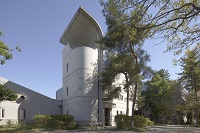
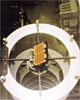
The aero-free-space laboratory serves as the site for instrument calibration for both laboratory and field experiments. It is also available for atmospheric research that cannot be done in any of the other atmospheric research facilities.
The ozone laser radar is equipped with 3 lasers of different wavelengths and 56- and 200-cm caliber telescopes. Accurate ozone profiles up to an altitude of 45 km are being measured with this instrument.
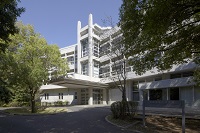
Climate change, caused by increasing atmospheric greenhouse gas concentrations, is the most important global environmental issue facing humanity today. Countermeasures must be based on sound scientific assessments. The following major research programs are conducted in this new facility:
(1) development and application of the climate change models based on various socio-economic and emissions scenarios,
(2) monitoring of atmospheric constituents to evaluate the ocean and terrestrial carbon sinks, and (3) assessment of forest sinks by remote sensing, forest models and statistical data. In addition, the facility includes equipment to evaluate low emissions vehicles.